The democratized pleasure palace — a global franchise machine that somehow still feels like childhood's safest transgression.
- Indulgent without being decadent — it's a treat, not a luxury, and the brand dies if it pretends otherwise
- Systematic without being soulless — McDonald's is a franchise machine, but the best locations still feel locally inhabited
- Nostalgic without being retro — the brand can reference its own history without becoming a heritage cosplay
- Playful without being childish — the jester archetype works for all ages, not just kids in ball pits
“You'd recognize it from the parking lot — that specific golden glow, those primary-color blocks, the only global brand that still believes your craving needs no apology.”
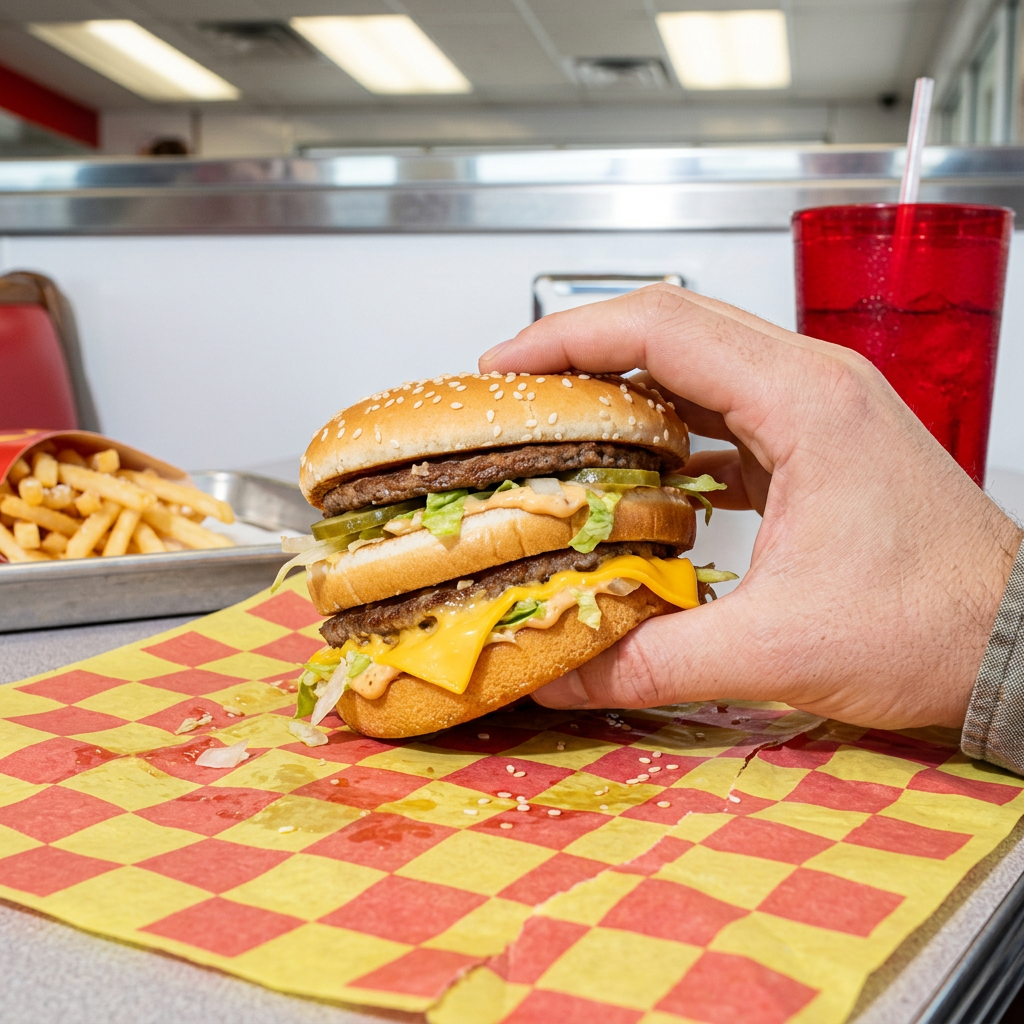
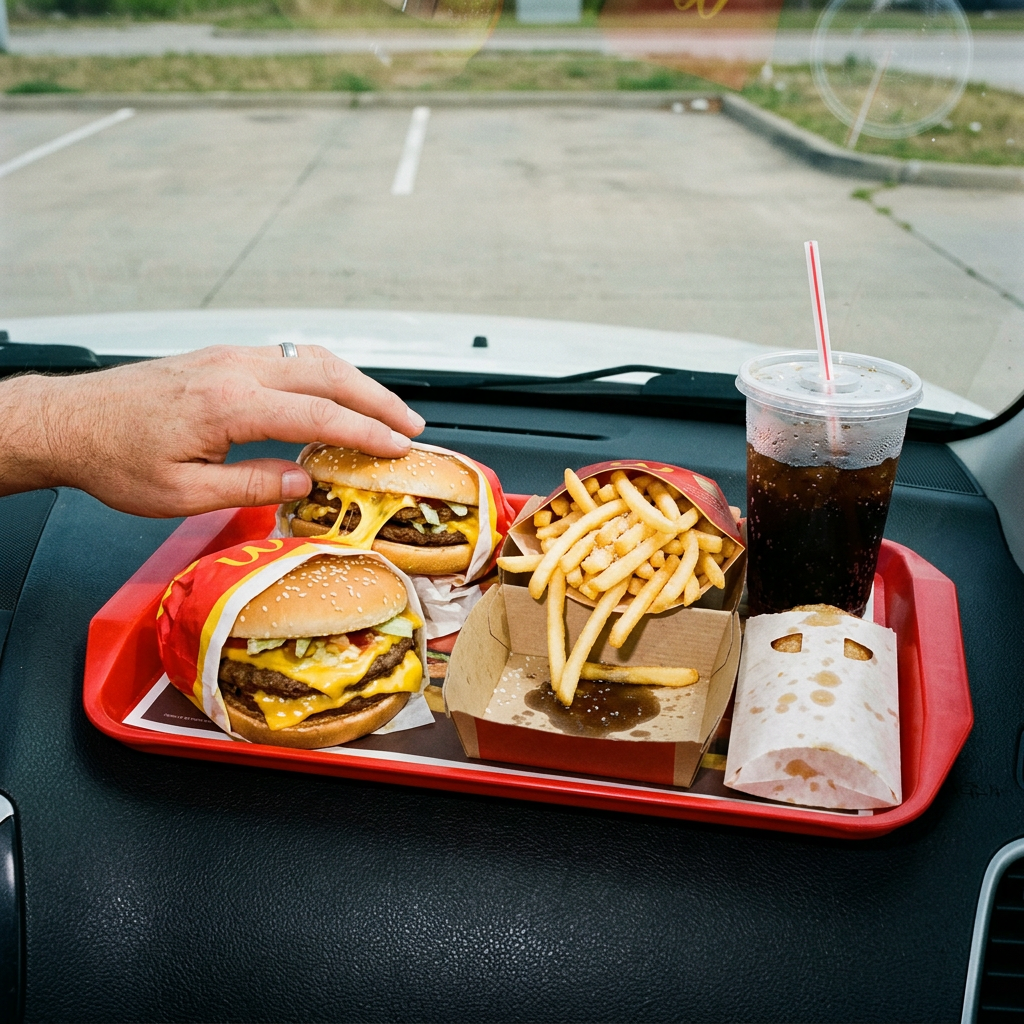
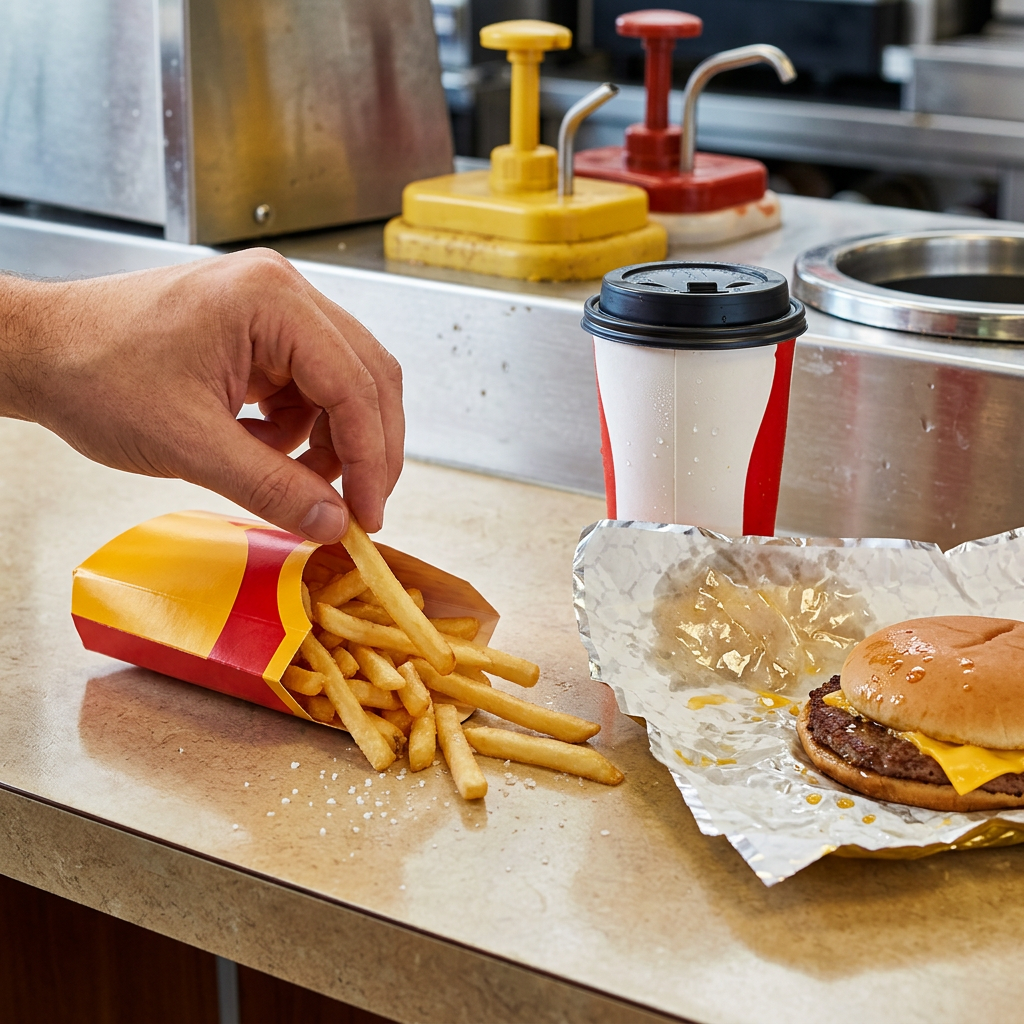
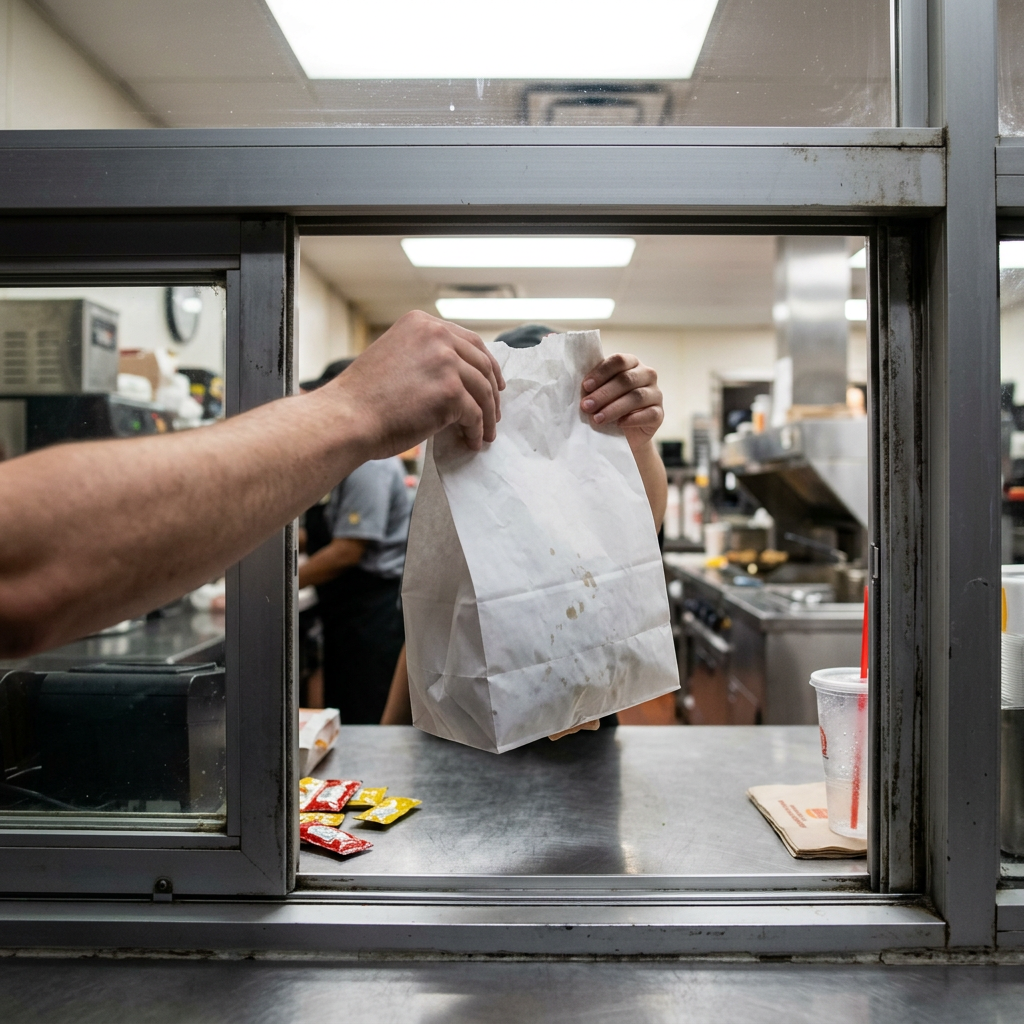
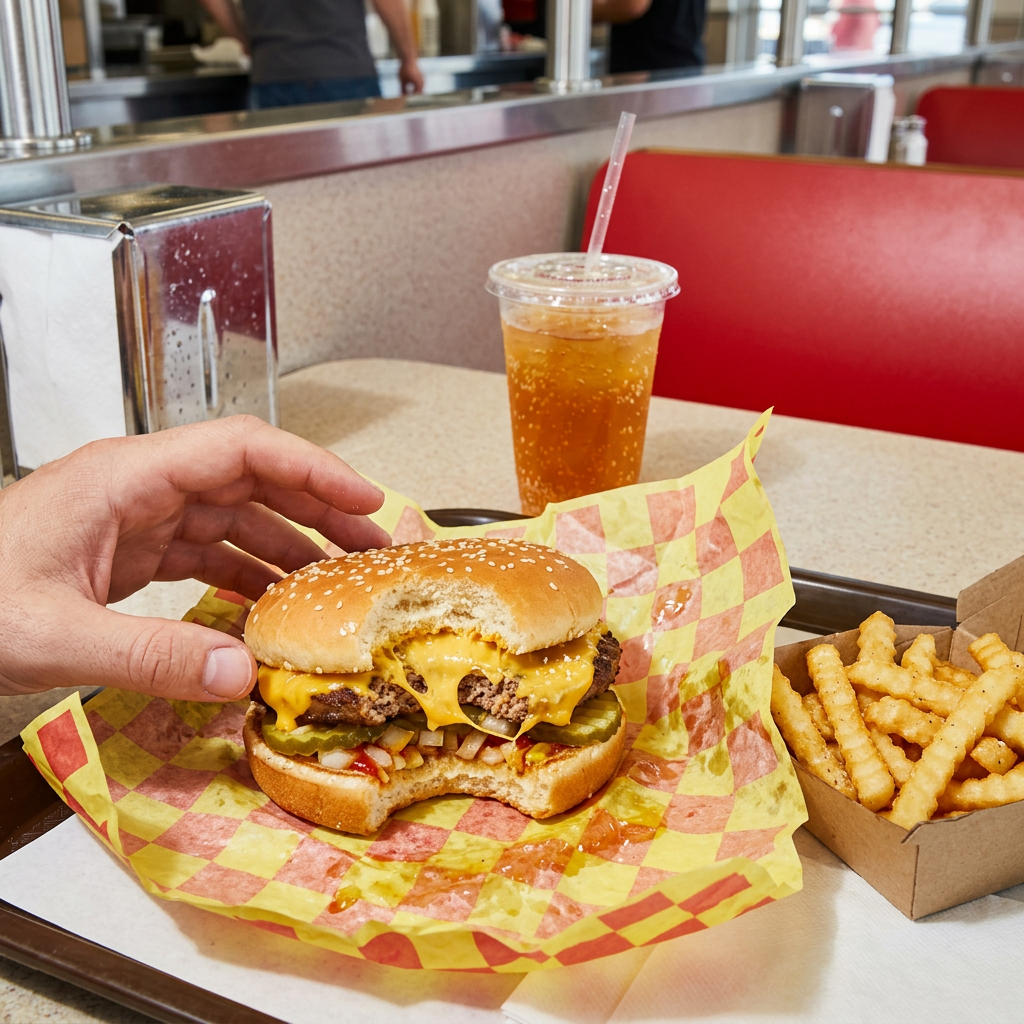
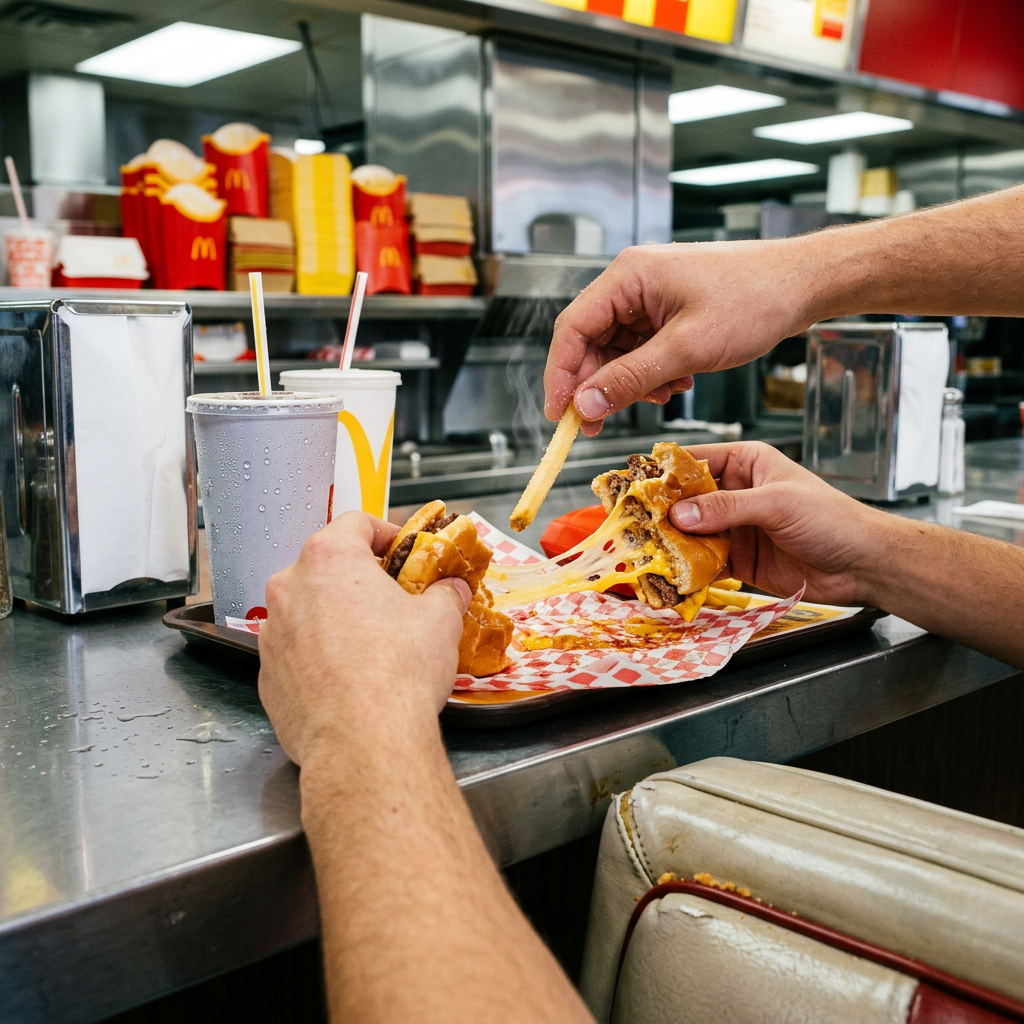
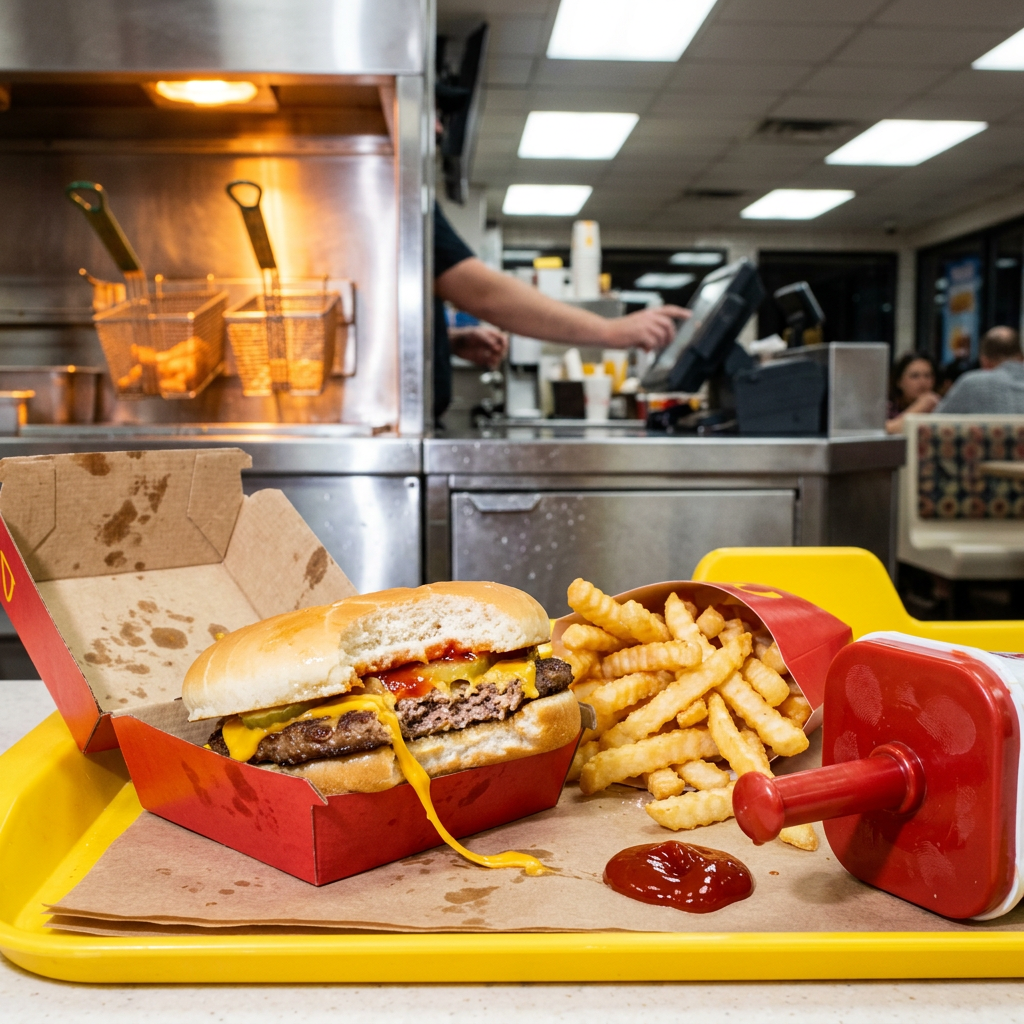
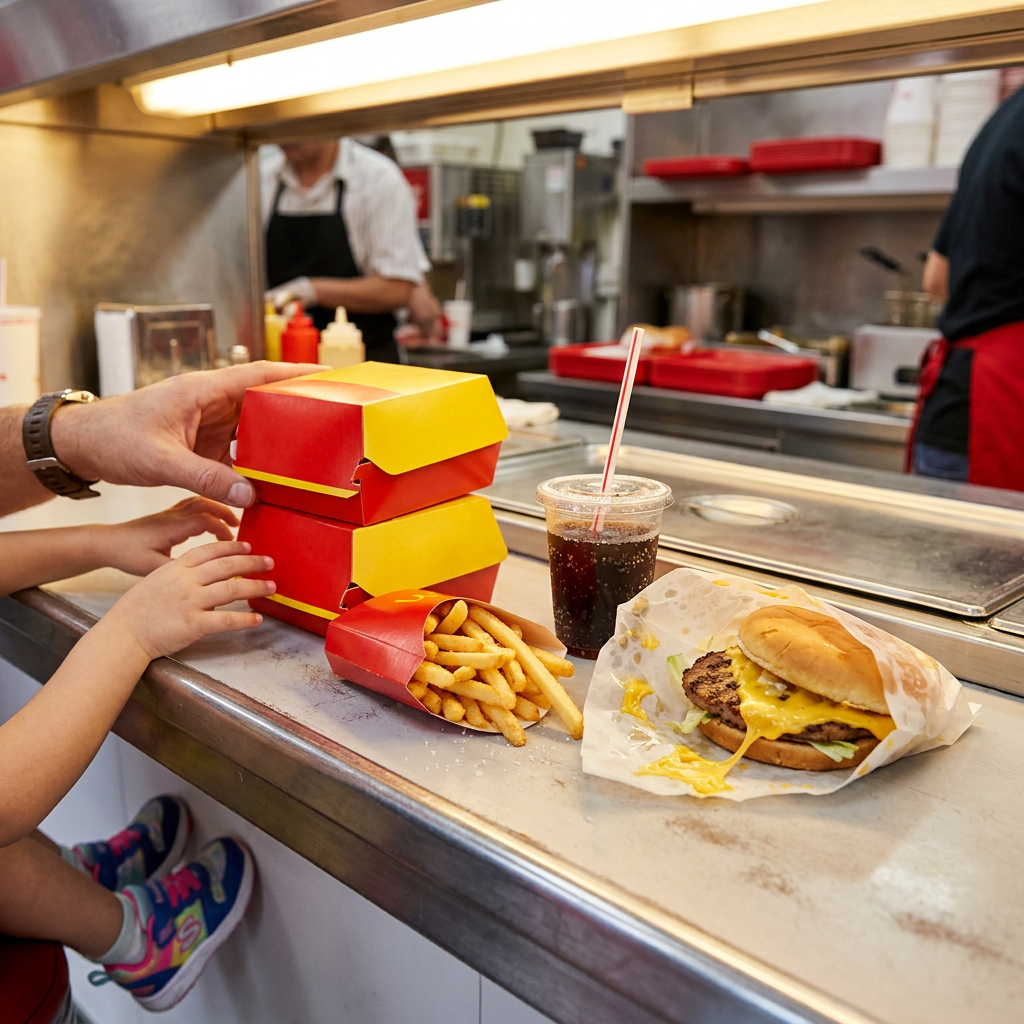
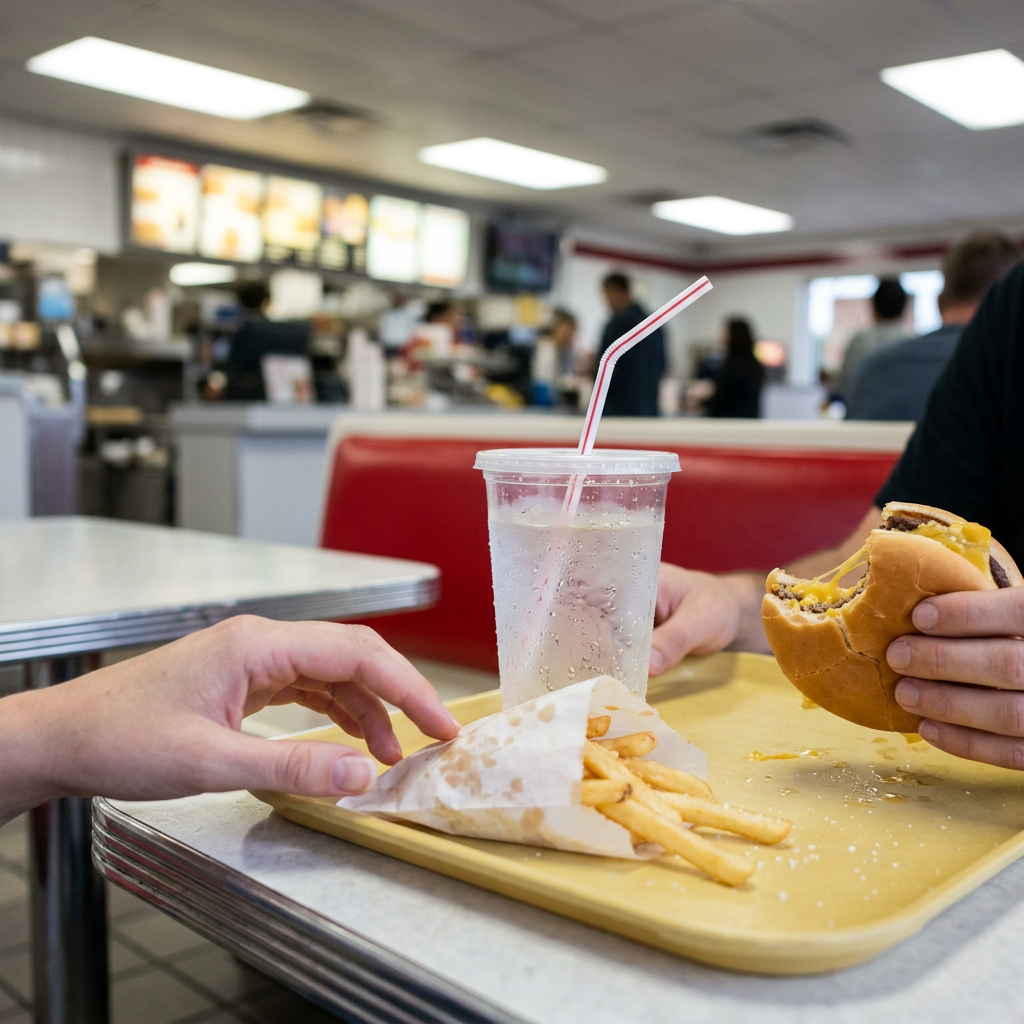
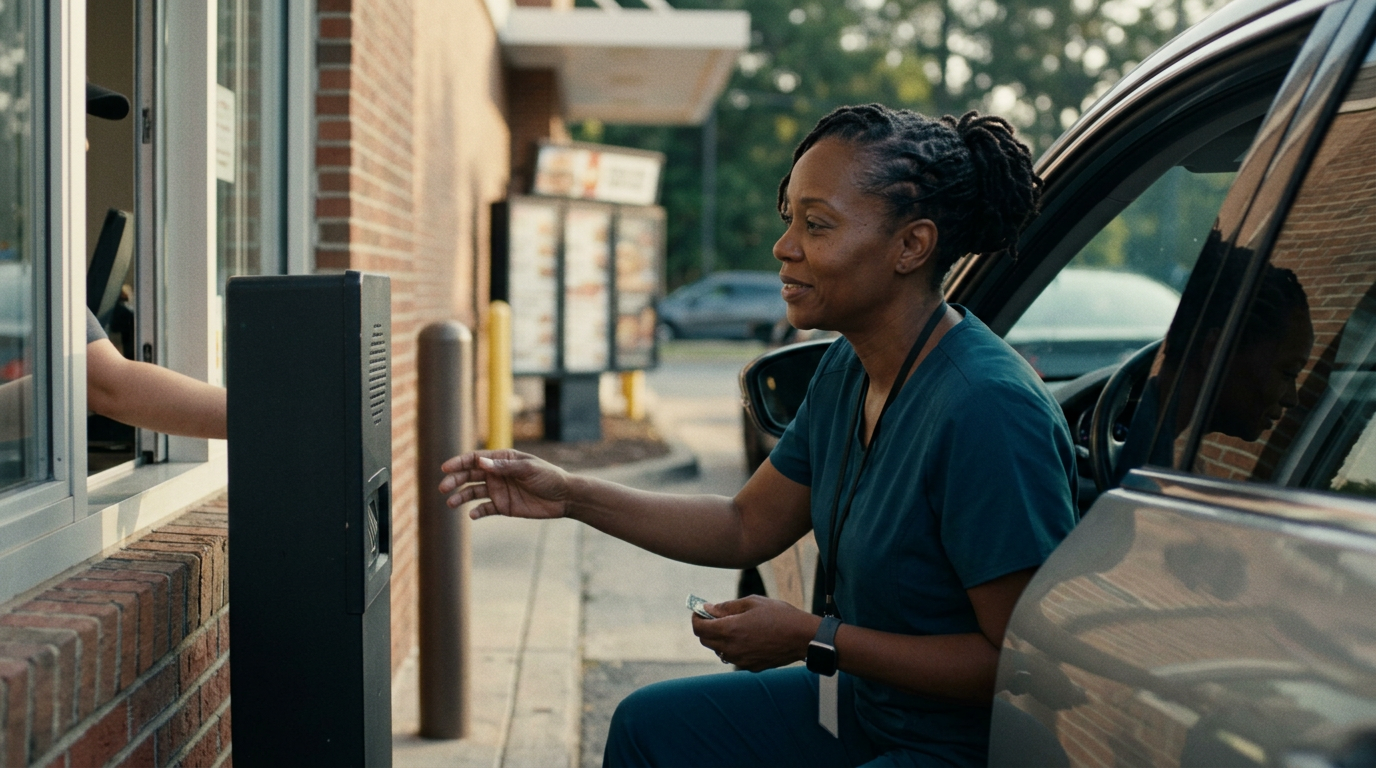
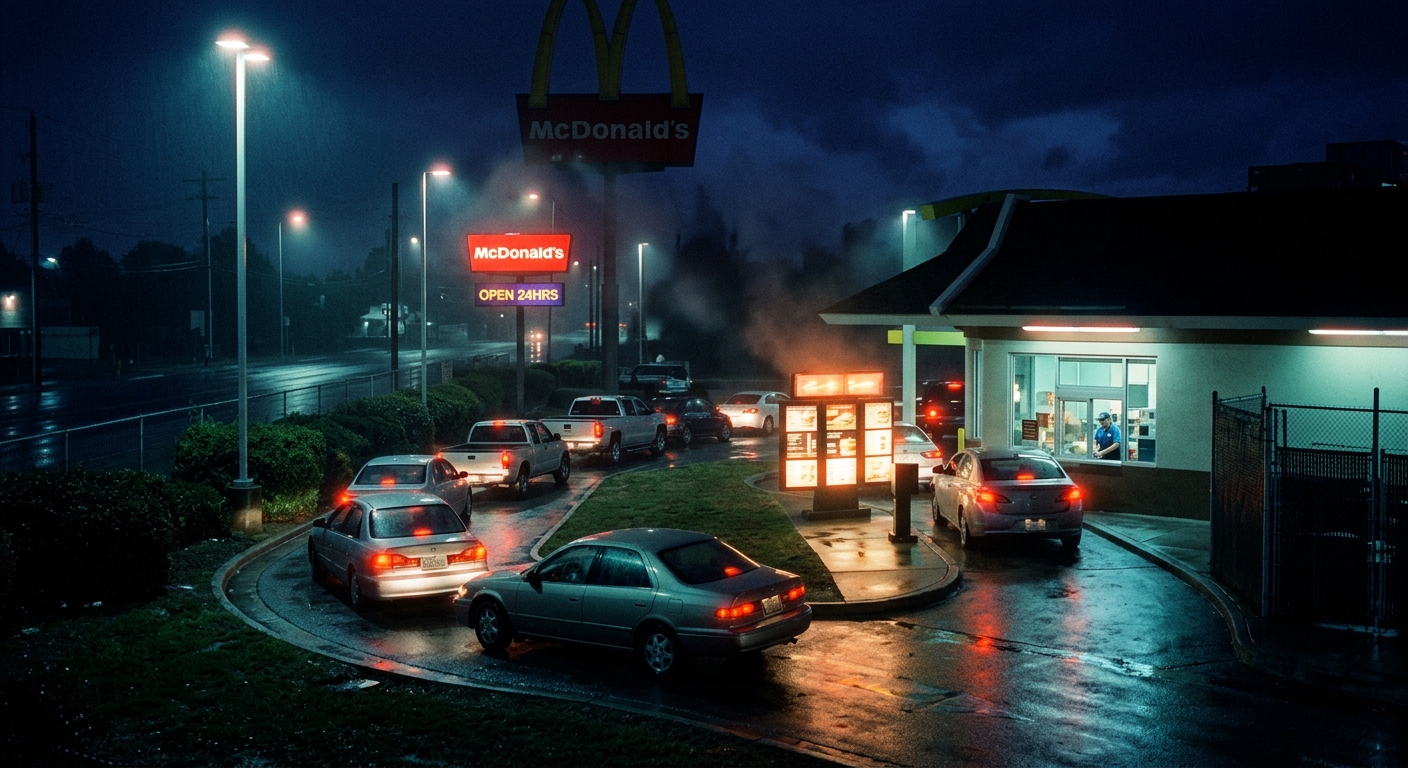
McDonald's is the global permission slip — a jester-everyman brand that owns the pleasure-without-pretense space abandoned by every fast-casual competitor who reached for kale and virtue signaling. The visual world is bright, immediate, unapologetic: high-key fluorescent lighting saturating reds and yellows, tight framing on cheese pulls and condensation beads, chrome surfaces catching overhead light. The voice speaks in short, active bursts — confident, present-tense, simple enough for a drive-thru speaker. Golden Arches Yellow and Big Mac Red anchor packaging as compositional blocks; Speedee headlines command attention while National 2 delivers clarity at speed. The brand celebrates its franchise consistency (same fries in Tampa and Tokyo) while honoring local menu oddities. Never apologizing into minimalism, never reaching for premium aspiration — just the frank visual register of appetite under commercial light, selling burgers and fries to office workers at 12:47pm, parents negotiating Tuesday ceasefires, night-shift nurses at 3am, teenagers spending first paychecks. Nostalgic without being retro. Systematic without being soulless. The treat, not the luxury.
- Condensation beads catching light on a clear plastic cup lid
- Red molded plastic booth seating worn smooth and glossy by a million lunches
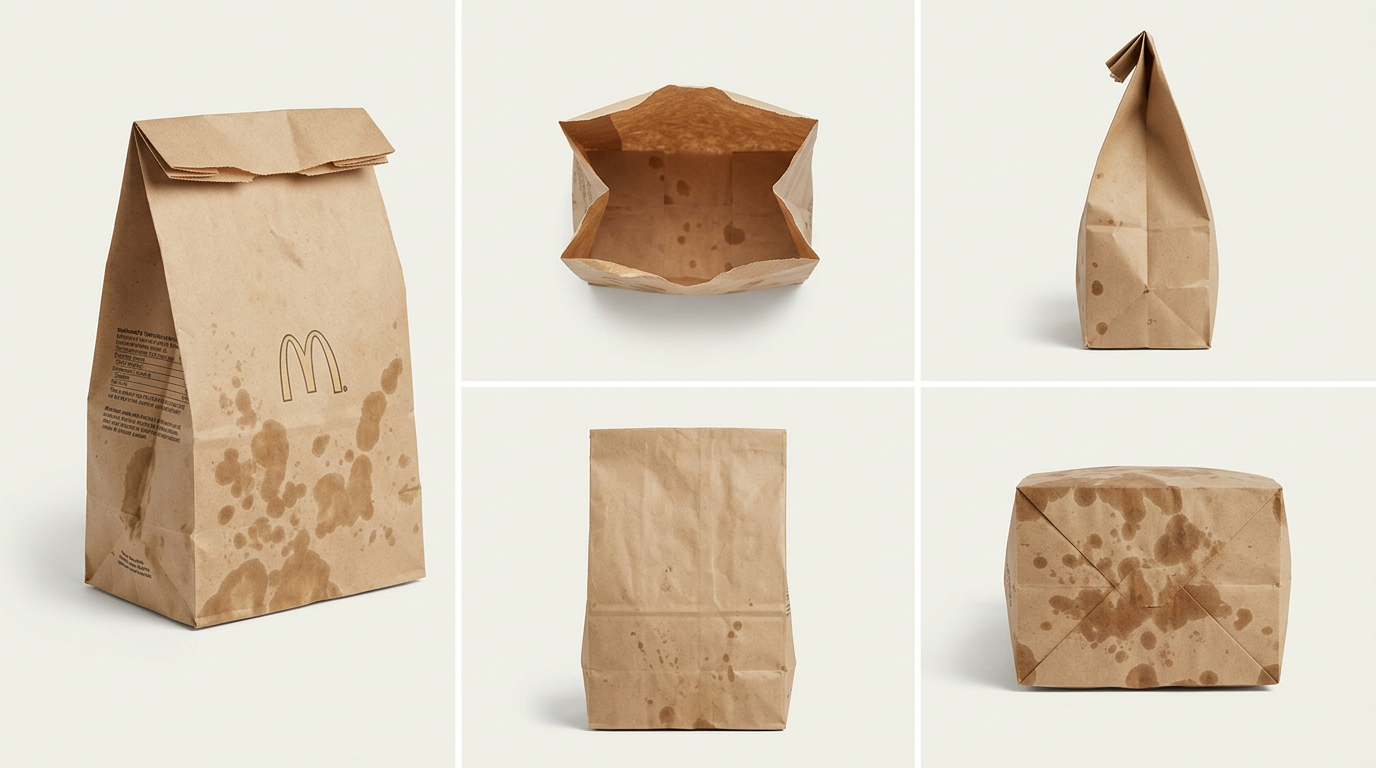
- Grease-spotted paper wrapper translucent under overhead fluorescent light
- The geometric simplicity of Golden Arches rising as landmark against blue sky
- Salt crystals sparkling on fresh-cut fries stacked in red cardboard container
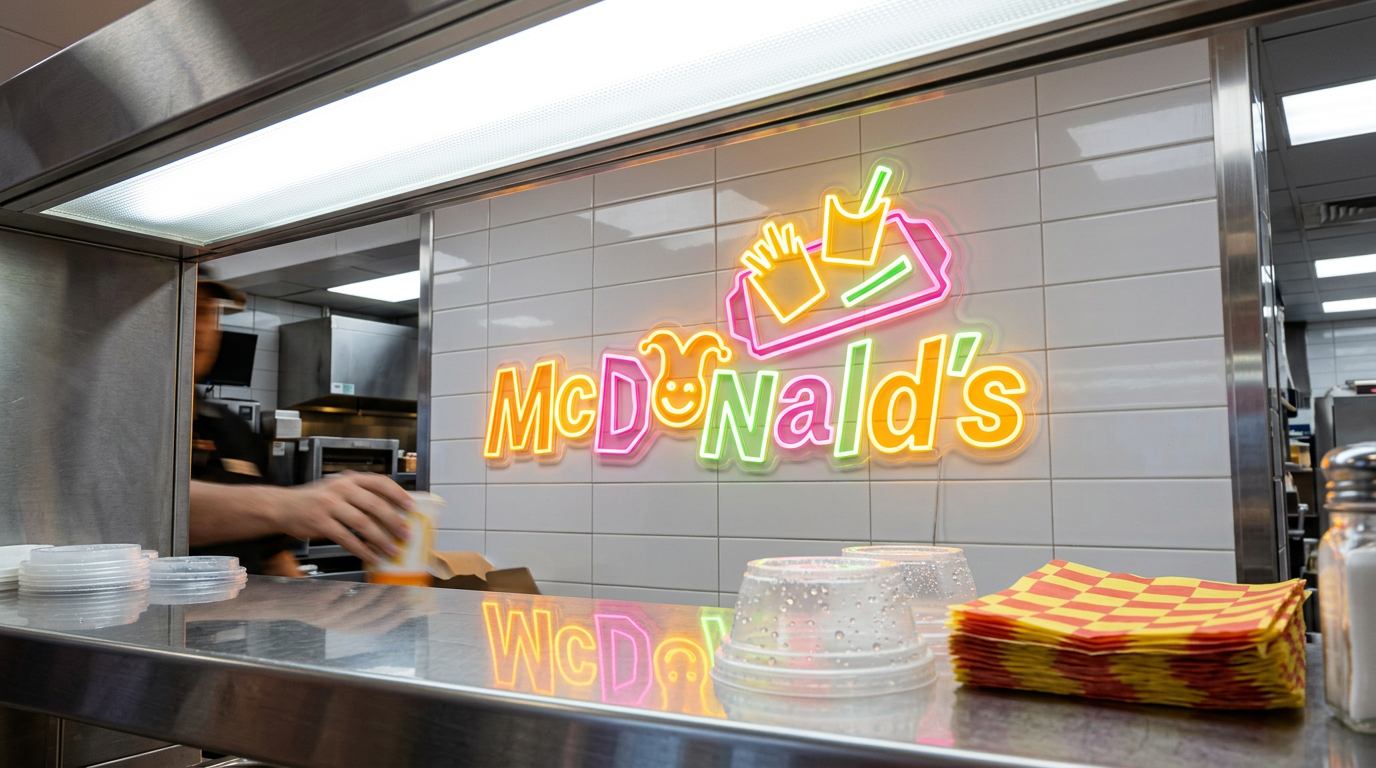
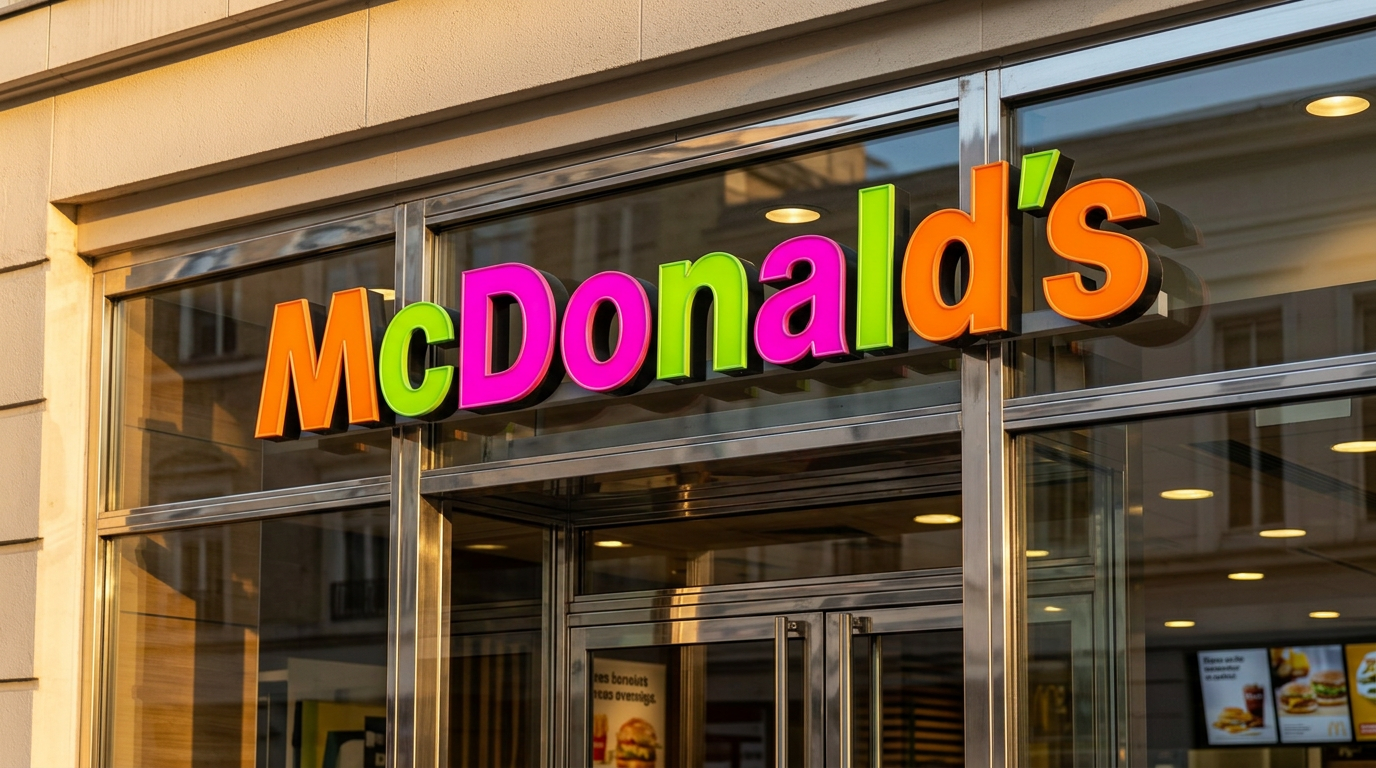
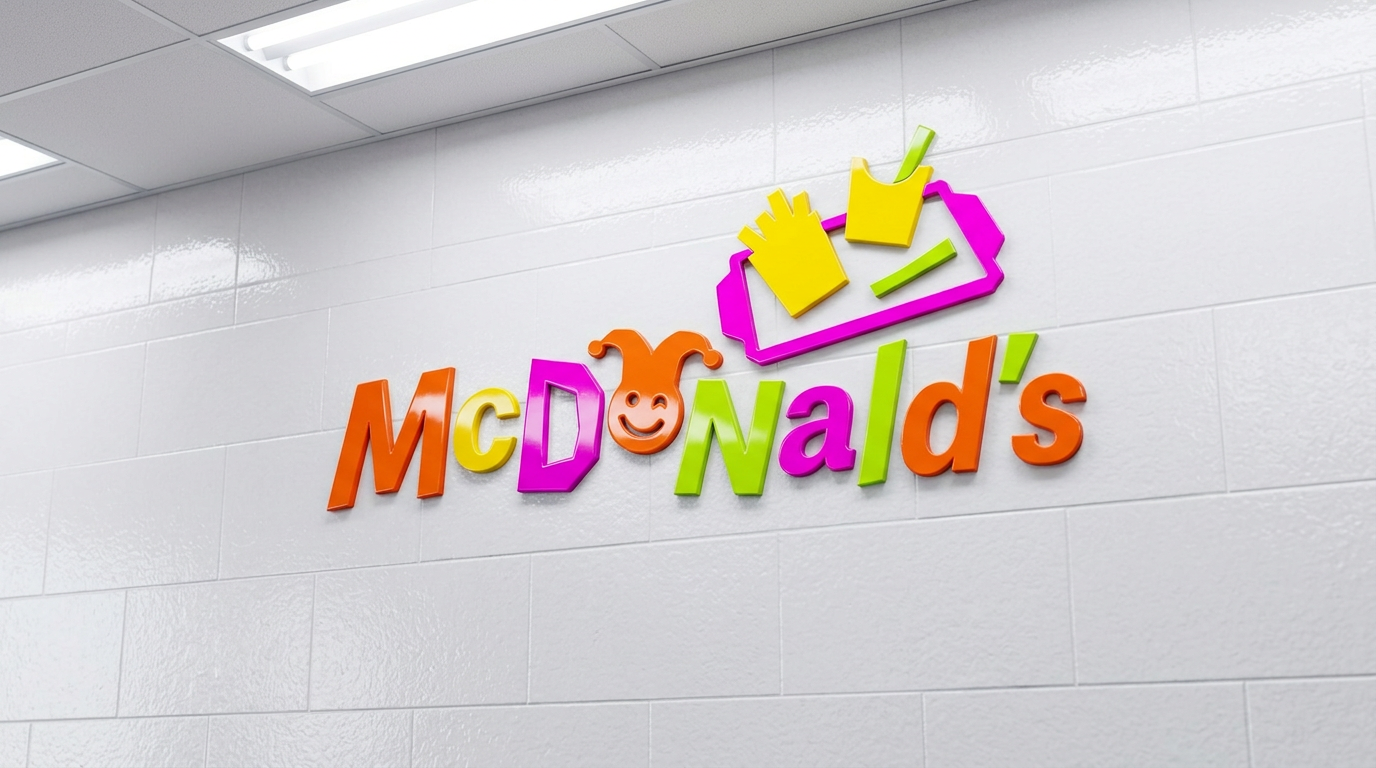
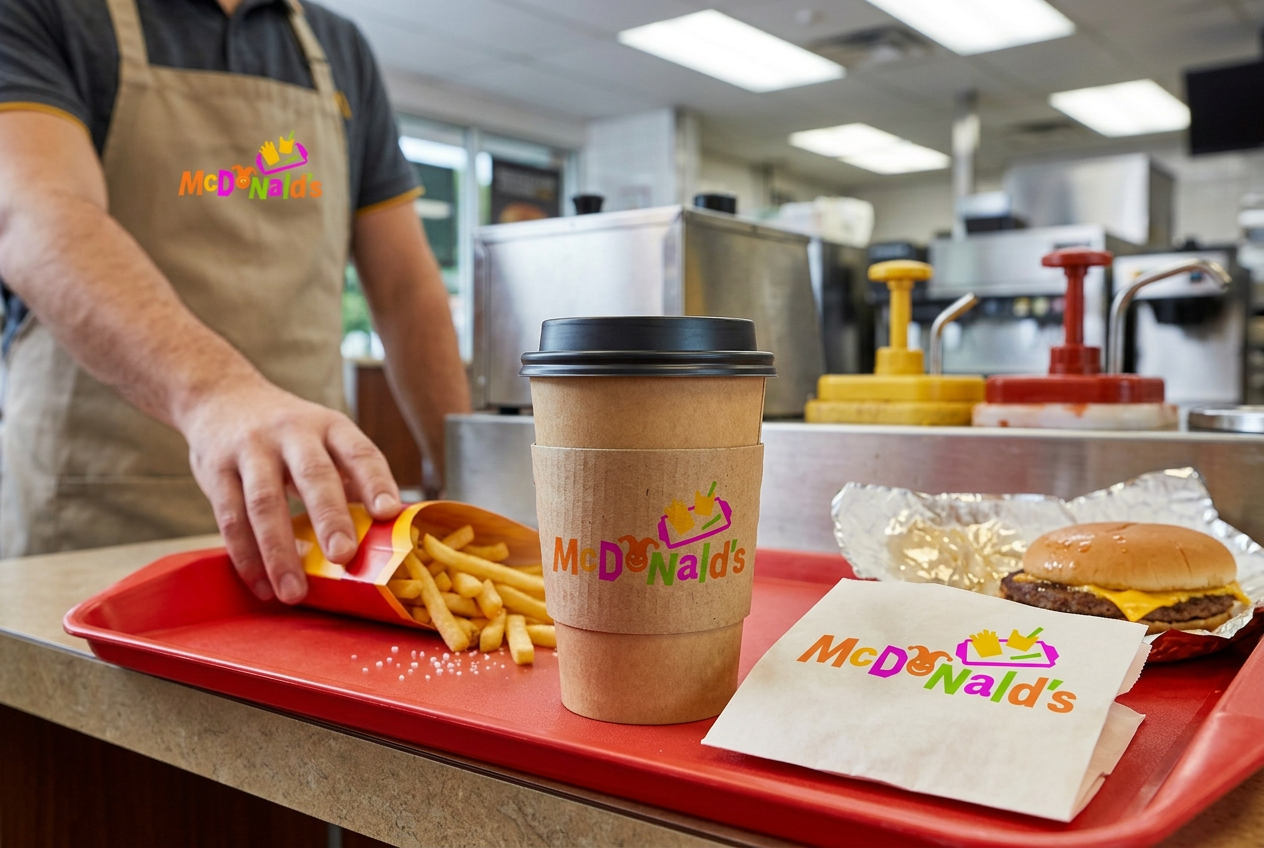
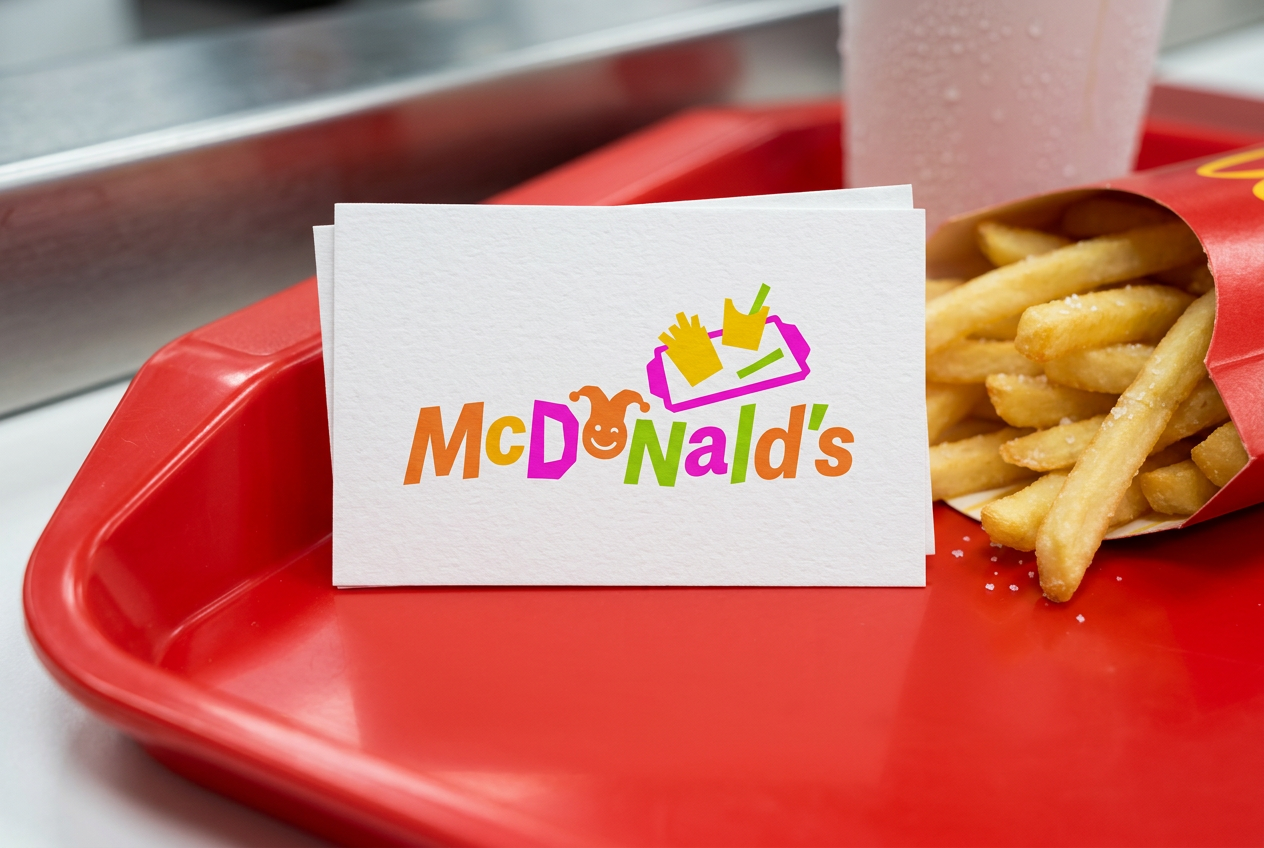
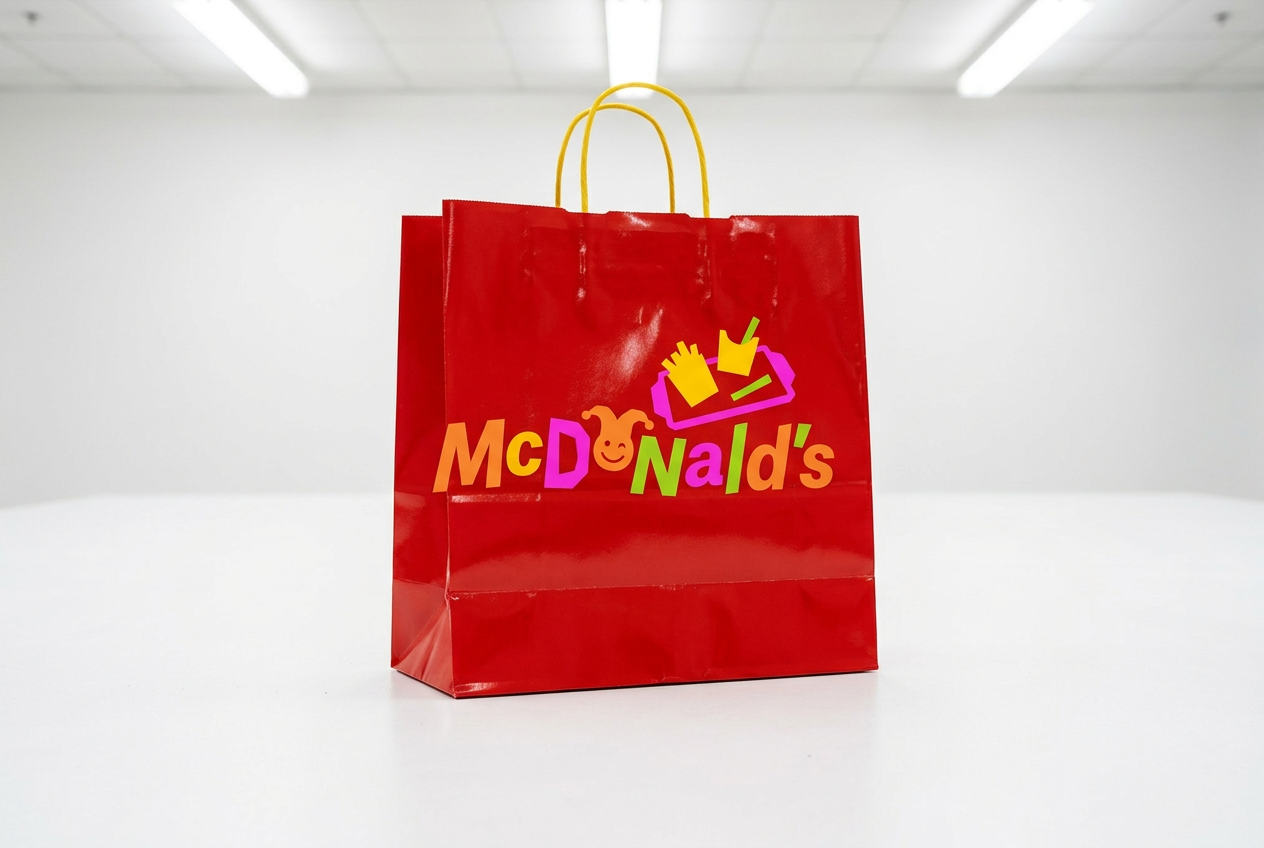
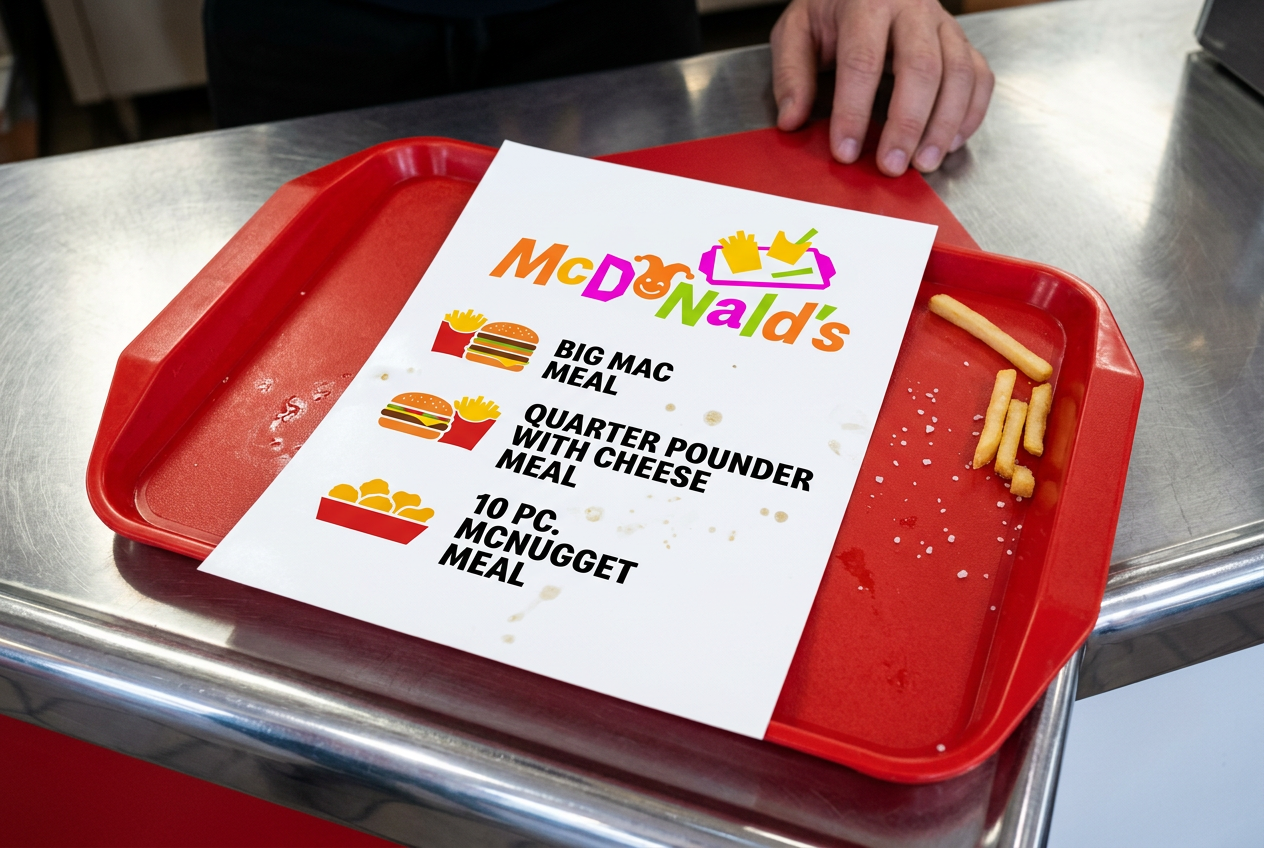
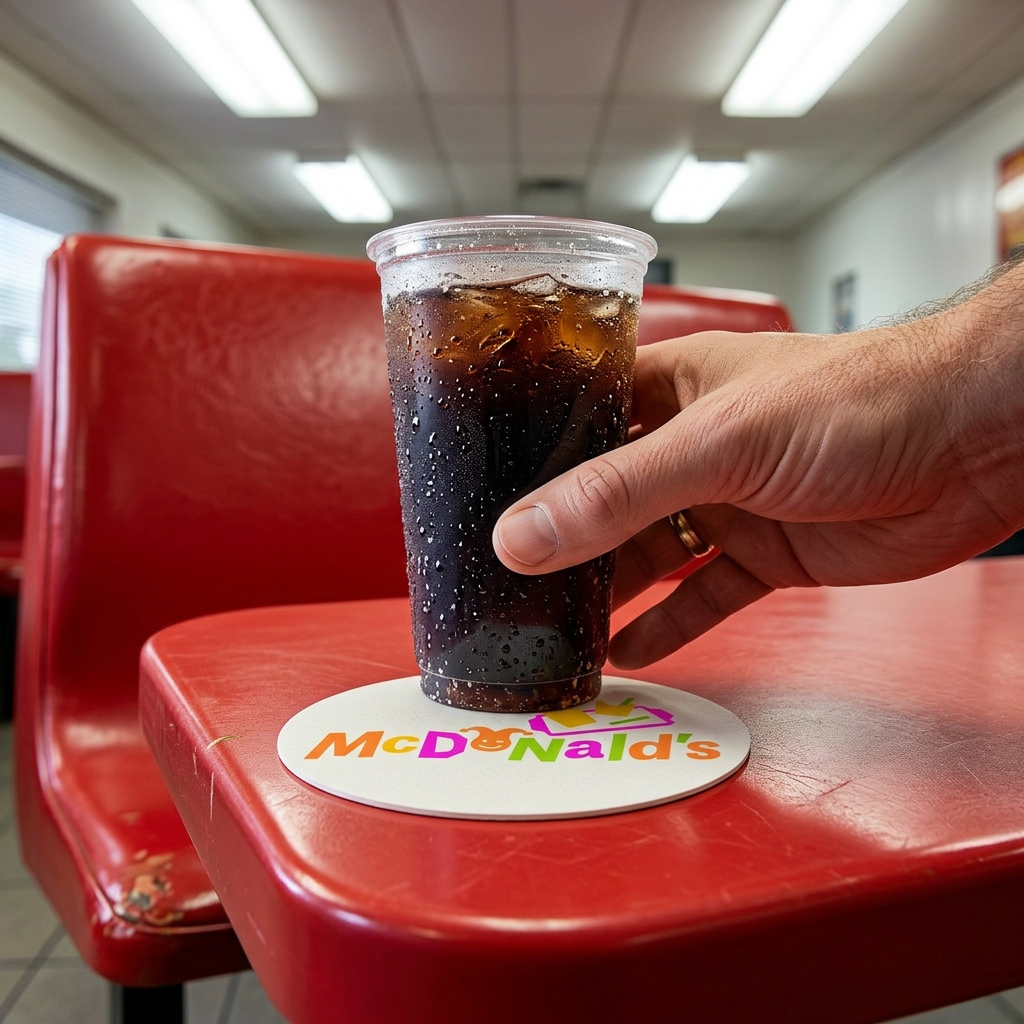
McDonald's speaks in short, bright bursts — the verbal equivalent of a red fry box against a yellow tray. The voice is confident without swagger, playful without trying to be your friend, and unapologetic about what it sells: permission to enjoy exactly what you came for. It uses active verbs, present tense, and sentence structures so simple a drive-thru speaker could handle them, because speed and clarity are brand promises, not just operational goals.
- +Use sentence fragments like menu items
- +Lead with the food, not the feeling
- +Say 'fries' not 'crispy golden potatoes'
- +Write like you're mid-order, not mid-essay
- +Keep it present tense and active voice
- +Own the indulgence — never apologize
- –Never start with 'At McDonald's, we…'
- –Avoid qualifiers like 'pretty good' or 'kind of'
- –Don't use food-blogger adjectives ('decadent,' 'sinful')
- –Skip the health halo — no 'guilt-free'
- –Never write longer than a tweet
- –Don't explain the joke or the jingle
Logos, palette, fonts, voice, positioning, audience.
“You'd recognize it from the parking lot — that specific golden glow, those primary-color blocks, the only global brand that still believes your craving needs no apology.”
What this brand really is
The democratized pleasure palace — a global franchise machine that somehow still feels like childhood's safest transgression.
Jester because McDonald's has always trafficked in permissible mischief — the Hamburglar, the Happy Meal surprise, the guilty pleasure of fries at 2am. Everyman because its entire commercial logic depends on being the place everyone can go, where no one judges your order or your budget.
In 1940, two brothers opened a drive-in in San Bernardino with a radical idea: make burgers so fast and consistent that anyone could afford to eat out. Ray Kroc saw the golden arches and turned local efficiency into a global system — franchising the formula, never the soul. Seventy years later, McDonald's is the place that still remembers what you ordered when you were seven, serves it exactly the same way today, and never apologizes for being exactly what it is: the world's favorite guilty pleasure that isn't guilty at all.
“McDonald's delivers the pleasure you're actually craving — hot, fast, familiar, and guilt-free — every single time, anywhere in the world.”
What we believe
To serve affordable, craveable food that brings joy to billions — without requiring permission or apology.
McDonald's owns the pleasure-without-pretense space that fast-casual brands abandoned when they went upmarket with kale and grain bowls. While Chipotle and Sweetgreen compete on virtue signaling and Shake Shack plays premium, McDonald's remains the only global QSR that still believes a cheeseburger and fries is a legitimate desire — not a guilty confession. The golden arches mean permission: to indulge, to feed a family on a budget, to eat the same thing you ordered at seven years old.
- Indulgent without being decadent — it's a treat, not a luxury, and the brand dies if it pretends otherwise
- Systematic without being soulless — McDonald's is a franchise machine, but the best locations still feel locally inhabited
- Nostalgic without being retro — the brand can reference its own history without becoming a heritage cosplay
- Playful without being childish — the jester archetype works for all ages, not just kids in ball pits
- Global without being generic — every country has its own McDonald's menu oddities and the brand should celebrate that variance
Who we're for
The McDonald's customer is the office worker who knows exactly what they want at 12:47pm, the parent negotiating a Tuesday night ceasefire with Happy Meals, the night-shift nurse hitting the drive-thru at 3am, and the teenager spending their first paycheck on nugs with friends. They span every demographic because the unifying trait isn't who they are but what they want: something specific, immediate, and exactly as expected.
Age 5-65+, household income $25k-$150k+, urban and suburban global presence with hyperlocal penetration
They value reliability over surprise, convenience over ceremony, and honest indulgence over virtuous pretense. They don't apologize for their cravings. They remember the brand from childhood and either share that with their own kids or revisit it alone as a private comfort. They know it's not 'good for them' and they've made peace with that.
- Orders the same thing 80% of the time, deviates only for limited editions or regional specials
- Visits on impulse or routine, rarely plans a McDonald's trip days in advance
- Uses drive-thru or mobile order to minimize friction, treats dining room as fallback or nostalgia play
- Monitors app for deals and rewards, gamifies discounts without shame
- Shares food photos only ironically or nostalgically, never aspirationally
- Defends their order when judged, owns their cravings publicly or privately
- To enjoy what they want without judgment or justification
- To share a universal reference point across generations and geographies
- To have one reliable constant in a world of endless optimization and choice fatigue
How we sound
McDonald's speaks in short, bright bursts — the verbal equivalent of a red fry box against a yellow tray. The voice is confident without swagger, playful without trying to be your friend, and unapologetic about what it sells: permission to enjoy exactly what you came for. It uses active verbs, present tense, and sentence structures so simple a drive-thru speaker could handle them, because speed and clarity are brand promises, not just operational goals.
Short, bright bursts in active present tense — confident without swagger, permission-granting without friendship, simple as a drive-thru speaker, fast as the promise.
“Hash browns. Hot coffee. Morning solved.”
“Your lunch break. Your order.”
“You ordered fries. We salted them. The rest is between you and your lunch break.”
“Lunch is in 12 minutes and the drive-thru knows your order.”
“Get it hot.”
“Two lanes. One menu. The same fries in every state — that's the whole point.”
- Use sentence fragments like menu items
- Lead with the food, not the feeling
- Say 'fries' not 'crispy golden potatoes'
- Write like you're mid-order, not mid-essay
- Keep it present tense and active voice
- Own the indulgence — never apologize
- Never start with 'At McDonald's, we…'
- Avoid qualifiers like 'pretty good' or 'kind of'
- Don't use food-blogger adjectives ('decadent,' 'sinful')
- Skip the health halo — no 'guilt-free'
- Never write longer than a tweet
- Don't explain the joke or the jingle
How we look
High-key commercial photography under fluorescent light — unapologetically saturated, tactile product truth, hands mid-reach, chrome and primary-colored packaging, appetite made immediate and honest.
- Condensation beads catching light on a clear plastic cup lid
- Red molded plastic booth seating worn smooth and glossy by a million lunches
- Grease-spotted paper wrapper translucent under overhead fluorescent light
- The geometric simplicity of Golden Arches rising as landmark against blue sky
- Salt crystals sparkling on fresh-cut fries stacked in red cardboard container
See the hero above for the palette, type specimens, and moodboard that follow from this philosophy.
Where we sit
- Speed and convenience as core promises — the brand still needs to signal 'fast' even when it's trying to signal 'quality'
- Family-friendly accessibility — McDonald's can never go full premium or exclusive without breaking its social contract
- Playfulness in kid-facing touchpoints — the Happy Meal and PlayPlace are load-bearing brand assets
- The apology posture of 'better ingredients' fast-casual — no kale salads photographed like Kinfolk magazine
- Founder mythology and craft narratives — McDonald's is a system, not an artisan, and should own that
- The sterile digital-first rebrand every QSR attempts — no sans-serif flattening into generic app-brand territory
- The 'premiumization' trap — wooden boards, Edison bulbs, and menu-speak like 'artisanal' or 'curated'
- Flat illustration and friendly sans-serifs that erase the brand's actual visual equity
- Stock photography of diverse families laughing at salads — the brand's honesty is that people come for fries and McNuggets
- Apology minimalism — trying to look like Sweetgreen when McDonald's has more visual charisma in its sleep
- Hashtag campaigns and meme-chasing that feel like a boardroom's idea of youth culture
What we offer
McDonald's serves hot, familiar fast food to billions worldwide — burgers, fries, breakfast sandwiches, chicken nuggets, soft-serve cones, and coffee that fuels commutes and late-night cravings. The menu is engineered for speed, consistency, and satisfaction, delivering the same Big Mac in Baltimore and Bangkok, with localized specials that nod to regional tastes without abandoning the core lineup.
“The Big Mac — two all-beef patties, special sauce, lettuce, cheese, pickles, onions on a sesame seed bun — is the singular menu item that transcends food and enters cultural iconography.”
- 01Big Mac
- 02Quarter Pounder with Cheese
- 03Chicken McNuggets
- 04World Famous Fries
- 05Egg McMuffin & All-Day Breakfast (select markets)
- 06McFlurry & Soft-Serve Cones
- 07McCafé Coffee & Espresso Drinks
- 08Happy Meal
- 09McChicken & Crispy Chicken Sandwiches
- 10Apple Pie